Home
Home
Oetzi The Tyrolean Iceman - European Acupuncture 2000 Years before China?
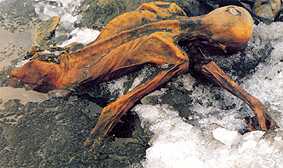
Ananga Sivyer writes: A 5,200-year-old corpse discovered in a glacier in the Alpine Oetz valley between Austria and Italy in 1991 is being hailed as evidence that Europeans practised acupuncture some 2,000 years before the Chinese. The body of the Tyrolean Neolithic man showed 15 groups of simple tattoos on the back and legs which tally with those used in modern acupuncture.
Added Feb 9, 2003
| 45,906 Reads
Dear all, Various television documentaries (BBC Horizon, Discovery Channel Ice Mummies) and magazines (Science, Discover Archaeology and The Lancet) have reported the story of the discovery of a Neolithic body and the tattoo markings on that body which are believed to relate to specific acupuncture points. The information and evidence used as the basis for these articles and documentaries is mainly derived from one paper published by: L Dorfer, M Moser, F Bahr, K Spindler, E Egarter-Vigl, S Giullën, G Dohr, T Kenner Below are some of the more relevant excerpts for your information and to quote as references for articles etc. with best wishes AMT Trainer Chandra Personal Development Services
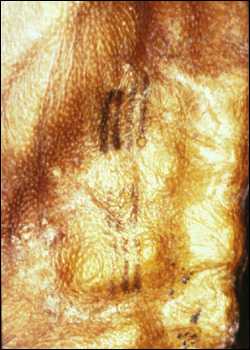
ALPINE DISCOVERYA 5,200-year-old corpse discovered in a glacier in the Alpine Oetz valley between Austria and Italy in 1991 is being hailed as evidence that Europeans practised acupuncture some 2,000 years before the Chinese. The body of the Tyrolean Neolithic man showed 15 groups of simple tattoos on the back and legs which tally with those used in modern acupuncture. "It looks like an early form of acupuncture originated in central Europe," said Dr Frank Bahr, president of the German Academy for Acupuncture, who was in Vienna to present the results of a study into the tattoos. "I was amazed, 80 percent of the points correspond to those used in acupuncture today".
Ancient Chinese acupuncture is thought to have originated in about 1,000 BC and scientists said the iceman's therapeutic tattoos were applied in 3,200 BC. "It is the oldest evidence we have of an early form of acupuncture," Bahr said. Why the iceman's skin was tattooed rather than pierced without leaving scars was unclear. Either the fresh wounds were rubbed with charcoal to create slight irritation and a longer-lasting effect, or the tattoos were intended as a kind of chart to show relatives where to massage and relieve the pains of the man. Another theory holds that after the lines were incised in the skin, the incisions were filled with a mixture of herbs which was then burnt. Most of the tattoos were made on the skin over joints that were affected by arthrosis (lumbar spine, knee, and ankle). After a six-year custody dispute between Austria and Italy, Oetzi's mummified body was returned to Italy in January. He is now housed in a special windowed fridge in the Museum of Archaeology in Bolzano, the capital of Italy's Alpine Alto Adige region. Source: The Journal of Chinese Medicine 5200-Year-Old Acupuncture in Central Europe?
The Tyrolean Iceman (1), by far the oldest European mummified human body (5200 years old), shows 15 well-preserved tattoo groups on his back and legs, none of which appears to have ornamental importance. The tattoos have a simple linear geometric shape and are located on parts of the body that are not expected to be displayed (2). Moreover, several tattoos that would have entailed superficial skin puncture seem to be located on Chinese acupuncture points. The tattoos were therefore investigated morphometrically, and photographs were subsequently overlayed by topographic representations of acupuncture points (3). According to the expert opinion of three accredited acupuncturists (4), nine of the 15 tattoos could be identified as being located on or within 5 millimeters of acupuncture points. Five tattoo groups on the back of the Iceman were located in close proximity, or directly over, acupuncture points of the urinary bladder (UB) channel. A close match between the acupuncture point UB 60 and one of the two tattoo crosses near the left, lateral ankle was observed. The theory of acupuncture predicts that perforation or irritation of the skin at specific locations, the acupuncture points, results in modified function of related, not necessarily adjacent, organs, allowing relief of pain or inflammation. It is known from computer tomography (5) that the iceman suffered from arthrosis of the lumbar spine. Acupuncture points used for treatment of this condition (3) coincide with tattoos found along the UB channel. These findings raise the possibility that the practice of therapeutically intended acupuncture originated long before the medical tradition of ancient China (approximately 1000 B.C.) and that its geographical origins were Eurasian rather than East-Asian, consistent with far-reaching intercultural contacts of prehistoric mankind. References and NotesH. Seidler et al., Science, 258, 455 (1992); K. Spindler, The Man in the Ice (Weidenfeld & Nicolson, London, 1994). T. Sjøvold et al., in Der Mann im Eis, K. Spindler et al., Eds. (Springer, Vienna-New York, 1995), vol. 2, pp. 279-286. 3. Beijing, Shanghai, and Nanjing colleges of traditional Chinese medicine, Essentials of Chinese Acupuncture (Foreign Languages Press, Beijing, 1980). F. Bahr, L. Dorfer, and S. Suwanda, presidents of the German, Austrian, and Swiss academies of acupuncture, respectively. D. zur Nedden and K. Wicke, in Der Mann im Eis, F. Höpfel, W. Platzer, K. Spindler, Eds. (Univ. of Innsbruck, Innsbruck, Austria, 1992), vol. 1, pp. 131-148. Leopold Dorfer Maximilian Moser Konrad Spindler Frank Bahr Eduard Egarter-Vigl Gottfried Dohr Published as a letter in response to a debate in Science Magazine – the basis of most articles & reports containing references to acupuncture are based on information provided by the above named.
Ancient Acupuncture or Tattooing ?Science Magazine
The oldest European mummified human body shows 15 well-preserved tattoo groups on his back and legs. In all 58 tattoos have been counted on his body. His tattoos were only simple dots and little lines. Tattoos on the Tyrolean Iceman have a simple linear geometric shape and are located on parts of the body that seem to be located on Chinese acupuncture points. The tattoos were investigated morph metrically, and according to the expert opinion of three accredited acupuncturists nine of the tattoos were on or within 5 millimeters of acupuncture points. Computer tomography revealed that the iceman suffered from arthrosis of the lumbar spine. Acupuncture points used for treatment of this condition coincide with the tattoos. Science Magazine explains "the Theory of acupuncture predicts that perforation or irritation of the skin at special locations, the acupuncture points, results in modified function of related, not necessarily adjacent, organs, allowing relief of pain or inflammation." These findings raise the possibility that the practice of therapeutically intended acupuncture originated long before the medical tradition of ancient China (approximately 1000 B.C.) and that its geographical origins were Eurasian rather than East-Asian, consistent with far-reaching intercultural contacts of prehistoric mankind." "... some of the tattoo locations on the back and the left leg of the Iceman are in close proximity or directly on the locations of classical acupuncture points for treatment of arthritis of the lumbar spine;. Radiological studies found evidence of exactly that disease in the Iceman. Signs of degeneration were found along the lumbar spine as well as in the joints of the hip, knee, and ankle. In acupuncture, perforation or irritation of the skin at specific locations, the acupuncture points, causes a reflectory change in the action of the related inner organs, or in the relief of pain or inflammation. Different modes of irritation are used in Chinese and Asian acupuncture: moxibustion (combustion of herbs over the points), puncture with needles and sometimes tattooing, in chronic diseases. Nine of the 15 tattoo groups are m the urinary bladder channel, acupuncture meridians in which Chinese medicine organizes acupuncture points. This channel running along the back and down to the feet, is also the primary location for treatment of back pain. Five additional tattoos are located on or proximal to acupuncture points connected to digestive functions." Source: Archaeology MagazineM. MOSER (Physiological Institute, University Graz, Austria), L. DORFER (Physiological Institute, University Graz, Austria and Austrian Society for Controlled Acupuncture), K. SPINDLER (Institute for Pre- and Protohistory, University Innsbruck, Austria), E BAHR (German Academy for Acupuncture and Auriculomedicine, Munich, Germany), E. EGARTER-VIGL (Department of Pathological Anatomy and Histology General Regional Hospital, Bozen/Bolzano, Italy), G. DOHR (Histological Institute, University Graz, Austria), T. KENNER (Physiological Institute, University Graz, Austria). References:1 Allison., M. J. 1996. Early mummies from coastal Peru and Chile. In The Man in the Ice, Volume 3: Human Mummies, K. Spindler, H. Wilfing, E. Rastbichler-Zissernig, D. zur Nedden, H. Nothdurfter (eds.), pp. 125-129.2 Dorfer, L., Moser, M., Spindler, K., Bahr, E, Egarter-Vigl, E., and Dohr, G. 1998. 5200-Year- Old Acupuncture in Central Europe? Science 282:242-243.3 Zur Nedden, D., and Wicke, K. 1992. The Similaun Mummy as Observed from the Viewpoint of Radiological and CT Data. In Der Mann im Eis, Vol. 1, E Höpfel, W. Platzer, K. Spindler, (eds.), University of Innsbruck, Innsbruck, Austria, pp. 131-148.4 Aspöck, H., Auer, H., and Picher, O. 1996. Trichuris trÉhiura Eggs in the Neolithic Glacier Mummy from the Alps. Parasitology Today 12(I):255-256.50eggl, J. 1998. Oral communication, University of Innsbruck, Austria.6 Bahr, E, Dorfer, L., and Suwanda, S. 1998. Presidents of the German, Austrian and Swiss Academies of Acupuncture, respectively. Expert opinion concerning the tattoos in the Tyrolean Iceman.7 Beijing, Shanghai, and Nanjing Colleges of Traditional Chinese Medicine. 1980. Foreign Languages Press, Beijing.
Researched by Ananga Sivyer, GoE Trainer, Author of The Art & Science Of Emotional Freedom Chandra Personal Development Services
Added Feb 9, 2003
| 45,906 Reads
🗣 Chat!
The GoE is the place to be for Modern energists.
Find out what's on where, who's doing what in energy tapping & Modern Energy. Get special offers & the latest information on special events, workshops and certification courses. |
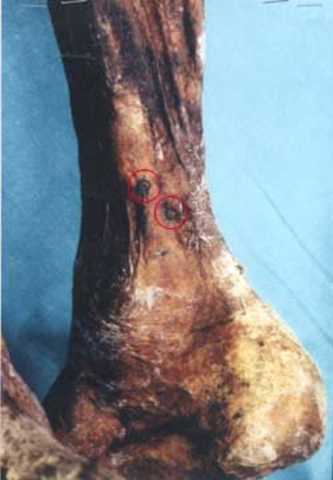 Five groups of linear tattoos along the spine were probably applied to combat back pains, and were found to be located on - or close to - classical acupuncture points. The iceman, nicknamed Oetzi by his finders and who is thought to have died of exhaustion at the age of about 45, suffered from acute arthritis, worms and diarrhoea.